

Anthropic published an engineering deep-dive this week on Managed Agents — their hosted platform for running long-horizon agent work. It's written for developers, but the architectural thinking behind it has real implications for anyone building or buying AI agent systems.
We've been deploying agents for demand generation clients for a couple of years now — content agents, outreach agents, research agents, SEO monitors. So when Anthropic's team writes about what breaks at scale and how they fixed it, we read carefully.
Here's what stood out.
The Problem They Solved: Harnesses Go Stale
The core insight in the post is deceptively simple: every agent harness encodes assumptions about what the model can't do on its own. The problem is that models keep getting smarter, so those assumptions expire — and the harness becomes dead weight, or worse, a constraint that limits performance.
Their example is sharp. They found that Claude Sonnet 4.5 would wrap up tasks prematurely as it sensed its context limit approaching — a behavior they called "context anxiety." They patched it in the harness with context resets. Then they ran the same harness on Claude Opus 4.5 and found the behavior was gone. The model had outgrown the fix. The resets were now just friction.
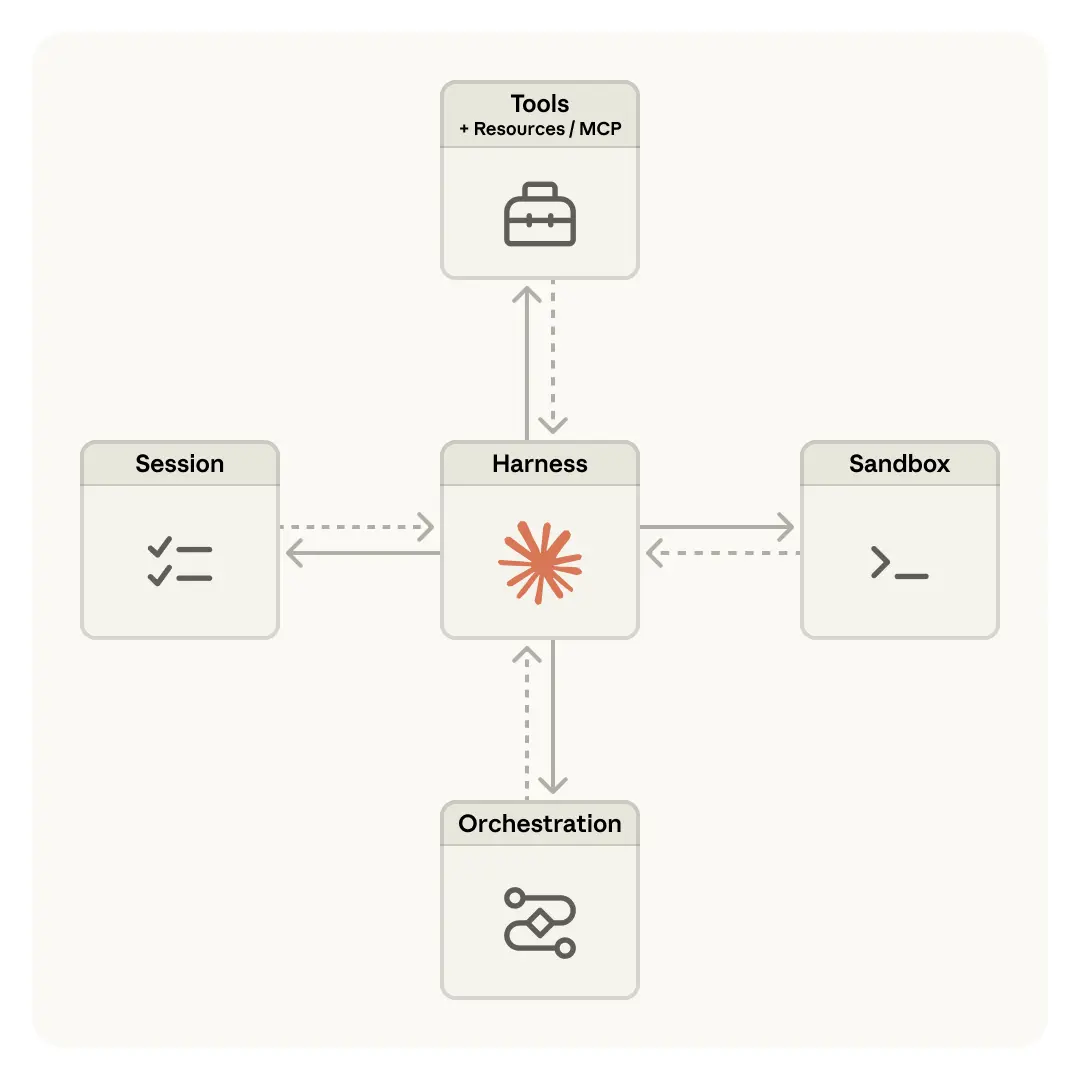
This is a real problem we've hit. Guardrails you build for one model become limitations for the next. Managed Agents is their structural answer: design the interfaces to outlast the implementations behind them.
 Source: Anthropic Engineering — Scaling Managed Agents
Decoupling the Brain from the Hands
The architectural move they made is clean: separate the brain (Claude + the harness loop) from the hands (sandboxes, tools, execution environments) and the session (the durable log of everything that happened).
Previously, all three lived in one container. That made the container a pet — something you had to nurse when it failed. When a container went down, you lost session state, you lost context, and debugging meant opening a shell inside an environment that also held user data.
By pulling them apart:
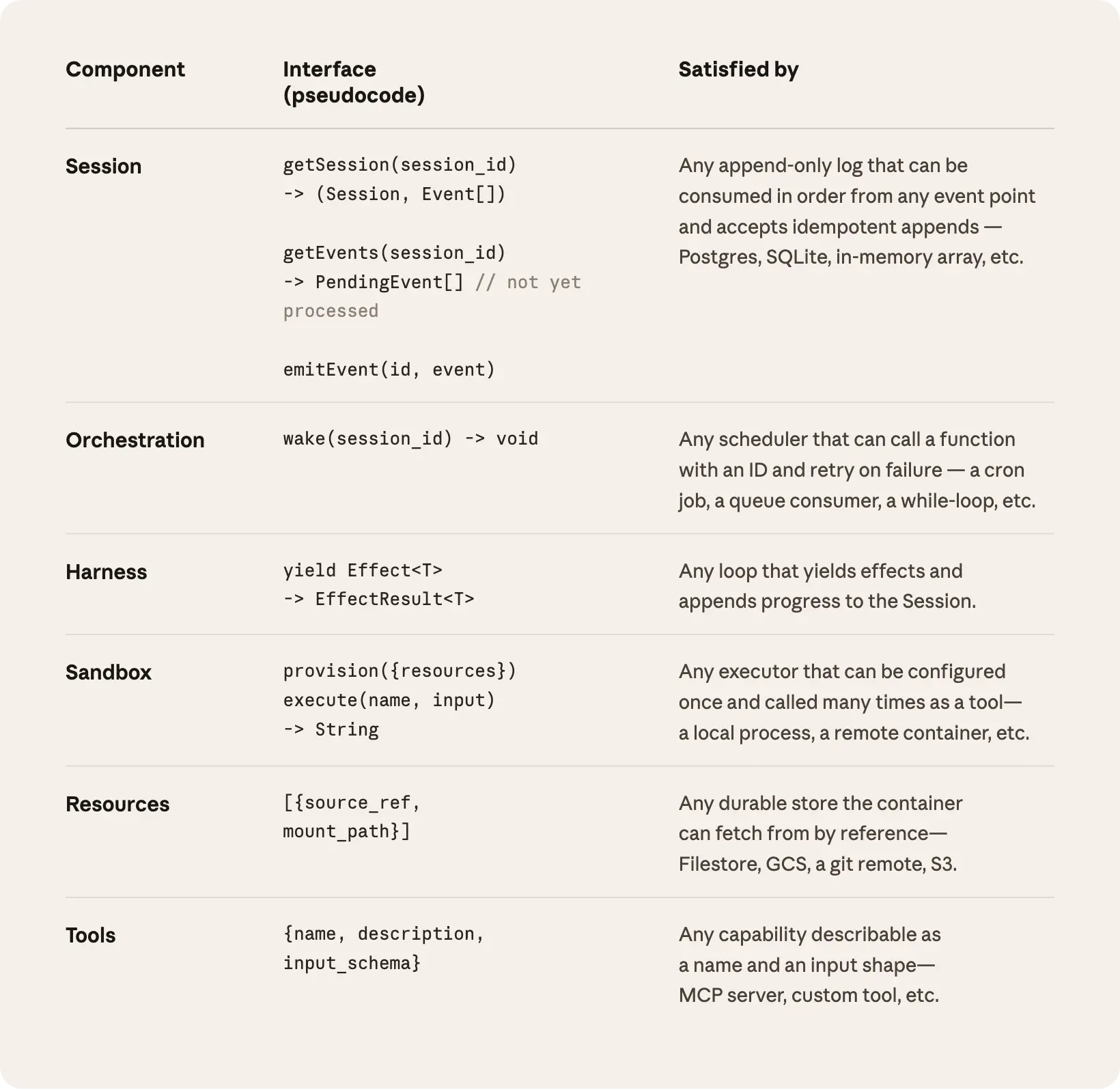
- If a sandbox container dies, the harness catches it as a tool-call error and provisions a new one. No state loss.
- If the harness itself crashes, a new one can boot, call
wake(sessionId), replay the event log withgetSession(), and resume exactly where it stopped. - Security improves because credentials never touch the sandbox where Claude's generated code runs. Auth tokens are held in a vault; the sandbox calls out through a proxy that fetches credentials without ever exposing them to the agent.
 Source: Anthropic Engineering — Scaling Managed Agents
For us, the sandbox-as-cattle framing is the most operationally useful part. We've had similar "nursed containers" problems in our own stack. The pattern they describe — provision({resources}) on demand, execute(name, input) → string as the universal interface — is something we're evaluating for our own agent infrastructure.
The Session as External Memory
The other piece we found genuinely interesting is how they handle context beyond the model's context window.
Long-horizon tasks routinely exceed what fits in a single context window. The usual approaches — compaction, trimming, summarization — all involve irreversible decisions about what to throw away. Get it wrong and the agent loses context it needed three steps later.
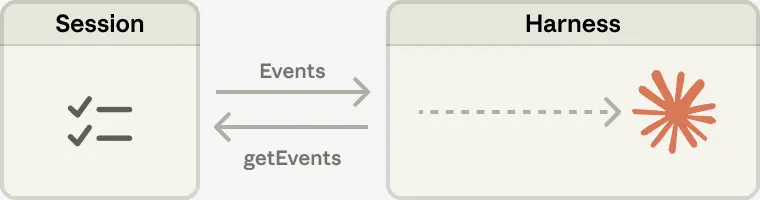
Their solution: the session log is durable and lives outside the context window. The interface getEvents() lets the harness pull positional slices of the event stream — rewinding to a specific moment, replaying lead-up context before an action, or picking up from the last checkpoint. The harness can transform what it pulls before passing it to Claude, enabling smart context engineering without destroying the underlying record.
 Source: Anthropic Engineering — Scaling Managed Agents
This is a meaningful improvement over the compaction approaches we've been using. Recoverable context means you can tune context engineering per-model without losing historical fidelity.
Scaling to Many Brains, Many Hands
One concrete outcome they share: p50 time-to-first-token dropped roughly 60%, and p95 dropped over 90% after the decoupling.
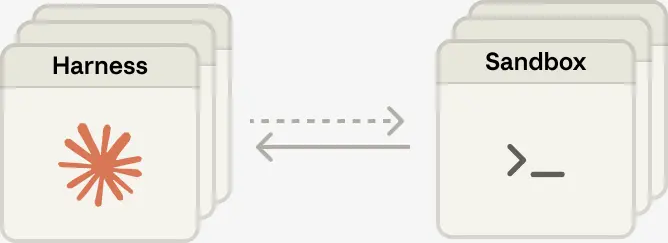
The reason is structural. When the brain lived in the container, every session paid the full container setup cost upfront — even sessions that never needed a sandbox. Once the brain is stateless and sandboxes are provisioned on demand via tool call, inference starts immediately. Container overhead only materializes if the task actually needs it.
The same architecture also unlocks multi-agent patterns cleanly. Each hand is just execute(name, input) → string — a name and input go in, a string comes out. The harness doesn't know whether the sandbox is a container, a phone, or a Pokémon emulator (their words). Brains can pass hands to one another.
 Source: Anthropic Engineering — Scaling Managed Agents
Our Take
Agents are not new to us. We've been running content pipelines, outreach sequences, research loops, and SEO monitors at scale across client accounts. What Anthropic published here isn't a new concept — it's a mature architecture for a problem we've been solving with duct tape and strong opinions.
The specific contributions worth noting:
Harness-as-cattle is a cleaner mental model than what most teams are running. If your harness can't be stateless, you have a reliability problem waiting to happen.
Credentials-out-of-sandbox is security hygiene that a lot of DIY agent stacks skip. Putting OAuth tokens in a vault with a proxy layer is the right pattern.
Session-as-external-memory is the most novel piece architecturally. Recoverable, queryable context history is a better primitive than compaction for long-running work.
For clients we're onboarding into agent infrastructure, this architecture is consistent with what we're building toward. For teams that are earlier in their AI journey, Anthropic's hosted Managed Agents service is a reasonable place to start — it handles the hard infrastructure problems so you can focus on what the agent actually does.
The docs are at platform.claude.com/docs/en/managed-agents/overview. Worth reading if you're building anything long-horizon.
Demand Signals builds and operates AI agent systems for demand generation — content, outreach, SEO, and research automation. If you're evaluating agent infrastructure for your business, let's talk.
Get a Free AI Demand Gen Audit
We'll analyze your current visibility across Google, AI assistants, and local directories — and show you exactly where the gaps are.